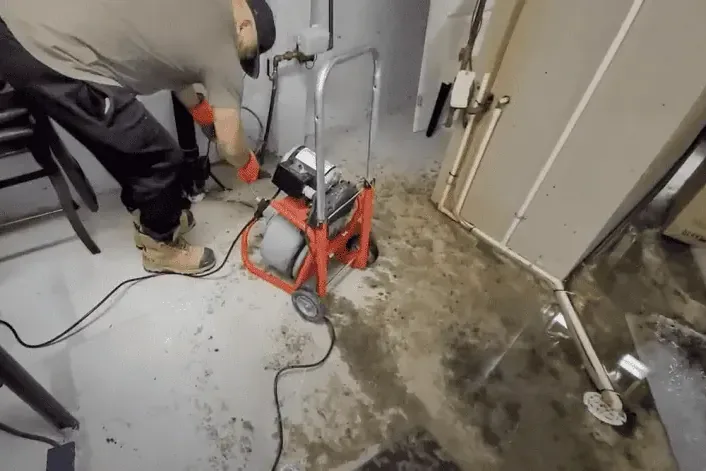
On August 8, 2024, heavy rain led to two sewer overflows reported by the City of Bessemer City. The city said excessive stormwater was entering its sewer system. Those overflows reached creeks, not homes, but a sewer overloaded by rain is the kind of problem that can also back up through drains inside a building.
Key takeaways
- On August 8, 2024, the city reported two overflows caused by excessive stormwater entering its sewer system.
- The overflows sent about 4,800 gallons into Gibson's Branch and about 9,600 gallons into Abernathy Creek, not into homes.
- More than four inches of rain fell by late afternoon, and localized flooding continued across the region.
- A backup inside a building is a Category 3 event: people stay out and porous materials are removed.
- Owners can lower their risk by watching drains during storms and keeping notes of any problem.
What the city reported on August 8, 2024
By late afternoon on August 8, 2024, the city had received more than four inches of rain, and localized flooding continued throughout the region. Heavy rain led to two sewer overflows reported by the city.
One overflow sent an estimated 4,800 gallons of untreated sewer and stormwater into Gibson's Branch, which flows into Long Creek and the Catawba River Basin. A second sent an estimated 9,600 gallons into Abernathy Creek, which flows into Crowders Creek and the Catawba River Basin.
The city said the cause was excessive stormwater entering the sewer system. Its release described overflows into creeks, not backups inside homes.
A storm of that size in one afternoon tests every part of a drainage system, from gutters and storm drains to sewer pipes and creeks.
How rain gets into a sewer system
A sewer is built to carry household wastewater, not storm runoff. When rain finds a way in, the pipes fill faster than they can empty.
The city also said it would expand its pipe testing to find inflow and infiltration.
Both pathways add water to the same pipes. When the system reaches capacity, water looks for the lowest outlet, which can be a manhole, a creek bank or a drain inside a building.
Inflow
Inflow is stormwater that enters a sewer system directly, for example through the openings in a manhole cover. After the overflows, the city said it would explore raising manhole covers.
Infiltration
Infiltration is groundwater or rain that soaks into the system through cracks and joints in underground pipes.
A creek overflow is not a backup in a house
An overflow sends sewage out of a manhole or a pipe into a creek or onto the ground. A backup sends it the other way, up through drains and toilets inside a building.
Some signs of a backup show up before any water appears on the floor.
Not every slow drain is a sewer problem. One slow fixture usually points to a clog in that fixture's own drain, while several slow fixtures at once point to the main drain or the sewer pipe.
- Slow drains in several fixtures at once can signal a blocked sewer pipe.
- Gurgling in a toilet or tub when another fixture drains is a warning.
- Water or sewage in a floor drain or a low shower is a backup in progress.
- A sewage smell near drains after a heavy rain deserves attention.
If sewage backs up inside
Sewage is Category 3 water. People and pets stay out of the area, and nothing is cleaned with household tools until the right protective gear is on hand.
Wait for protective gear and trained help before wading into a flooded room. Sewage carries bacteria that can spread through skin contact and splashes.
A full sewage backup cleanup removes what the sewage touched and treats what remains.
- Stop using sinks, tubs, toilets and the washing machine so more water does not enter the pipe.
- Photograph the backup before anything is moved.
- Keep children, pets and unprotected adults out of the affected rooms.
- Contact the city's Public Works Department, whose Water Division handles water and sewer pipe maintenance, or a plumber to find where the blockage sits.
- Contact a restoration team for extraction and cleanup.
What sewage backup cleanup involves
Cleanup follows a fixed order, because sewage spreads on shoes, tools and wet materials. Read the full steps for sewage backup cleanup.
Extraction and removal
The extraction crew removes standing water, then cuts out carpet, pad and drywall that absorbed it. Porous materials do not come clean, so they go out.
Cleaning and drying
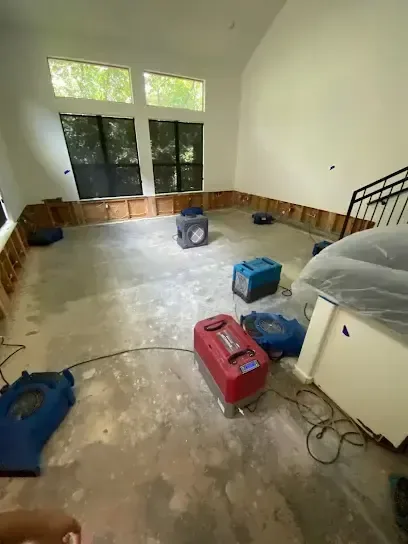
Hard surfaces are cleaned and treated, then dried with air movers and dehumidifiers. Moisture readings confirm the structure is dry before repairs begin.
- Carpet, pad and drywall that touched sewage are removed and bagged.
- Hard floors and cabinet bases are cleaned and treated.
- Air movers and dehumidifiers dry the structure.
- Readings confirm the space is dry before repairs.
Who handles what
The city runs its own water system through Public Works, and its wastewater is treated through a contract with the City of Gastonia. Where a city pipe ends and a private pipe begins is a question for the city or a plumber.
Public Works has three divisions: Streets/Maintenance, Water and Natural Gas. The Water Division handles water and sewer pipe maintenance, water plant operations, pump station maintenance and meter reading.
For rain that enters a home from outside, the work is storm and flash flood cleanup rather than a sewage job. The two can happen at the same time, so the crew checks the source of the water first.
Getting ready for the next heavy rain
A storm can pass in an afternoon, but its effects can last longer. Notes made during the storm help everyone afterward.
The Bessemer City water damage pages list every service and what it involves.
- Keep floor drains clear and know where each one is.
- Know where the home's cleanout is, if it has one, and keep the area around it clear.
- Hold off on laundry and the dishwasher during the heaviest rain if drains are already slow.
- Move valuables off low floors before a forecast of heavy rain.
- Write down when a problem starts and what the weather was doing.
- Keep the city's contact details and a plumber's number where they are easy to find.
Questions
Did the August 2024 overflows reach homes?
The city's release described overflows into Gibson's Branch and Abernathy Creek, not backups in homes.
What are inflow and infiltration?
Inflow is stormwater entering a sewer through openings such as manhole covers. Infiltration is groundwater or rain seeping in through cracks in underground pipes.
What should be done if a toilet or drain backs up during a storm?
Stop using water in the building, keep people out, photograph the backup and contact the city or a plumber to find the blockage. A restoration team handles extraction and cleanup.
Is a sewage backup covered by homeowners insurance?
It depends on the policy. Some policies need a separate add-on for backups, so the insurer can say what applies.
How long does sewage cleanup take?
A small backup on hard flooring can take a few days, while a larger one that reached carpet and walls takes longer. Moisture readings set the schedule.
Who treats Bessemer City's wastewater?
The city contracts with the City of Gastonia for wastewater treatment.