Structural Drying and Dehumidification in Clover, SC
Surfaces dry in a day, but framing, subfloor and concrete do not. The drying team sets air movers and LGR dehumidifiers to the class of loss and keeps them running in Clover homes until readings match a dry reference.
(888) 532-8921Get the framing dried to a reading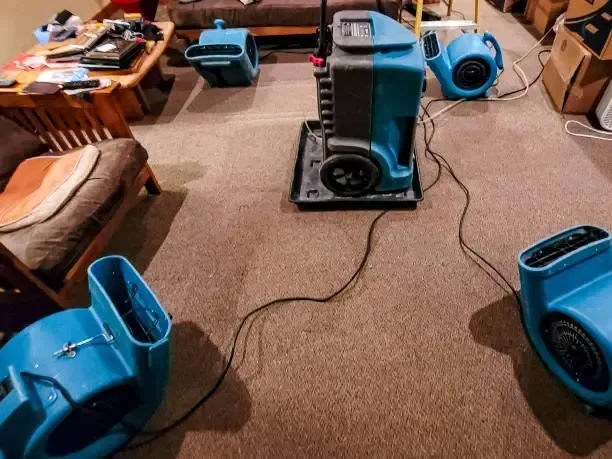
What every structural drying and dehumidification job is held to
Treated as urgent, any hour
Active water is treated as urgent at any hour. The response team rolls with extraction gear, air movers and meters, nights and weekends included.
Dried to the IICRC S500 goal
Air movers and LGR dehumidifiers are sized to the class of loss and stay on site until the readings reach the dry goal.
A claim file built every day
Moisture maps, psychrometric logs and timestamped photos are kept from the first visit on, the record an adjuster looks for.
First steps for structural drying and dehumidification while help is on the way
- Keep equipment running. Leave air movers and dehumidifiers on, day and night.
- Keep doors as set. Doors and containment are placed to control the airflow.
- Hold the thermostat. Keep the temperature where the drying team set it.
- Leave the cords alone. Dehumidifiers drain on their own, so nothing needs unplugging.
What does structural drying and dehumidification cost in Clover, SC?
Structural drying typically runs $1,000 to $5,000 here, depending on how many rooms are wet, the class of loss and how many days the equipment runs. Dense materials like hardwood and concrete take longer and cost more.
One or two rooms
- Class 1 or 2 loss
- Three to four days
- Daily moisture logs
Several rooms
- Class 2 or 3 loss
- Containment set up
- Four to six days
Dense materials
- Hardwood or concrete
- Desiccant or LGR drying
- A week or more
Ranges are typical, not a quote: the water category, square footage, material class and how fast drying started move the number most. Run the water damage cost calculator for a closer range.
How structural drying and dehumidification is handled, start to dry
The tech on the walkthrough maps moisture before any equipment goes down, and the gear stays until the readings say dry, not until the room looks dry.
Map
Meters and thermal imaging find every wet material.
Set
Air movers and dehumidifiers go in by class of loss.
Measure
Readings are logged every day.
Verify
Equipment leaves when readings match dry.
Structural drying is the part of water damage work that decides whether the problem is actually over. Drywall can feel dry while the bottom plate behind it is still wet, and a subfloor can look fine while the joists under it hold water. Drying to a reading, not a feeling, keeps hidden damage from showing up months later.
How the drying plan is set
The water category and class of loss set the equipment. Class 1 is a small, low-porosity loss, while Class 4 means dense materials like hardwood, plaster or concrete that need longer and drier air. Air movers are placed along wet walls, and dehumidifiers are sized to pull the evaporated water out of the room.
Still damp after the cleanup? The drying team can take readings and set equipment.
Have the drying readings takenWhat gets measured every day
- Moisture content of framing, subfloor and drywall
- Temperature and relative humidity inside the drying area
- Grains per pound of the air going in and coming out
- A dry reference reading from an unaffected part of the house
Why humid air matters
Muggy summer air slows evaporation, which is why LGR dehumidifiers, which keep pulling water at lower humidity, matter on summer losses. Containment with plastic sheeting keeps the drying air where the water is. The EPA indoor air quality pages explain why indoor humidity matters, and Energy Saver covers dehumidifiers for everyday use.
Structural drying and dehumidification across Clover and nearby communities
Where the crews work
The response team covers ZIP 29710 end to end: the Downtown Historic District and Main Street, Timberlake and Mountainview Road off SC 55, Bethel and Bethany, and the coves along the Lake Wylie shoreline.
Nearby coverage reaches York, Lake Wylie, Gastonia, Bessemer City, Belmont, Tega Cay, Rock Hill, Fort Mill.
Related water damage services
Structural Drying and Dehumidification questions, answered
Still dealing with it?
Still damp after the cleanup? The drying team can take readings and set equipment.
(888) 532-8921 Have the drying readings takenWhat does structural drying mean?
Structural drying means drying the building itself, the framing, subfloor, drywall and concrete, not just the surfaces. It follows the IICRC S500 standard and is measured with moisture meters until materials reach a dry reference.
Why can't the fans come out when the floor feels dry?
Framing, subfloor and drywall hold water after surfaces feel dry. Equipment comes out when readings match the dry reference, which prevents hidden damage later.
What is an LGR dehumidifier used in structural drying?
LGR stands for low grain refrigerant. It keeps pulling water from the air even at lower humidity, so materials keep drying near the end of a job, when ordinary units slow down.
How noisy is structural drying equipment?
Air movers and dehumidifiers run day and night and make steady fan noise. The drying team places them to dry the wet areas and leaves walkways clear.
How much electricity does structural drying use?
Each air mover and dehumidifier draws power, and a multi-room job adds to the bill for the drying days. The equipment log helps if the claim includes that cost.
How long does structural drying take?
Most jobs take three to seven days. Class 4 losses with hardwood, plaster or concrete take longer, and readings decide when equipment comes out.
Floors and walls still wet? Get them dried to a reading.
Hidden water in framing and subfloor causes trouble months later. The drying team measures daily until the readings say dry.
(888) 532-8921Set the drying equipment in place