Slab Leak Water Damage in Clover, SC
When a water line under a concrete slab leaks, the damage starts beneath the flooring where nobody can see it. The drying team lifts what is wet, extracts the water and dries the slab and wall bottoms in Clover homes.
(888) 532-8921Talk to a tech about the warm floor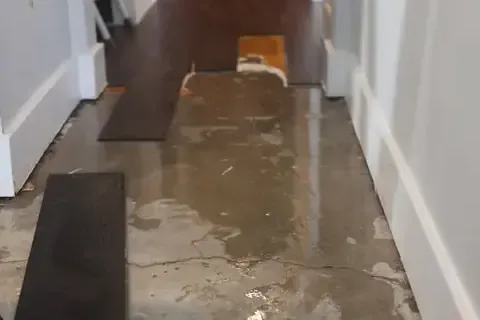
What every slab leak water damage job is held to
Treated as urgent, any hour
Active water is treated as urgent at any hour. The response team rolls with extraction gear, air movers and meters, nights and weekends included.
Dried to the IICRC S500 goal
Air movers and LGR dehumidifiers are sized to the class of loss and stay on site until the readings reach the dry goal.
A claim file built every day
Moisture maps, psychrometric logs and timestamped photos are kept from the first visit on, the record an adjuster looks for.
First steps for slab leak water damage while help is on the way
- Read the meter. With every fixture off, watch whether the meter still moves.
- Shut the main. If the meter moves and the floor is damp, close the main valve.
- Clear the area. Move rugs and furniture off the warm or wet spot.
- Call a plumber and a drying crew. One finds the line, the other dries what the water reached.
What does slab leak water damage cost in Clover, SC?
Slab leak water damage drying typically runs $1,500 to $7,500 here, not counting the plumbing repair. A small area under tile stays near the low end, while carpet, cabinets and several rooms over the leak push it higher.
Small area
- One room over the leak
- Tile or vinyl plank lifted
- Slab and baseboard drying
Several rooms
- Carpet and pad removed
- Cabinet toe kicks opened
- Desiccant or LGR drying
Long-running leak
- Water spread for weeks
- Flooring across a level
- Wall bottoms cut and dried
Ranges are typical, not a quote: the water category, square footage, material class and how fast drying started move the number most. Run the water damage cost calculator for a closer range.
How slab leak water damage is handled, start to dry
The tech on the walkthrough maps moisture before any equipment goes down, and the gear stays until the readings say dry, not until the room looks dry.
Map the spread
Meters trace water under flooring and into walls.
Lift and extract
Wet flooring and baseboard come up and water is removed.
Dry the slab
LGR or desiccant units pull water out of the concrete.
Verify
Readings must match a dry part of the same slab.
A slab leak is a water line failing inside or under a concrete floor. Homes built on a slab often have supply lines running below or through the concrete, and when one leaks, the water rises through the slab and spreads under carpet, vinyl plank and tile before anyone sees it.
Signs of a slab leak
- The water meter keeps moving with every tap off
- A warm spot on the floor from a hot water line
- Damp carpet, cupping laminate or loose tile with no visible source
- The sound of running water when nothing is on
The EPA WaterSense meter test is the quickest home check.
Meter still spinning and the floor feels damp? A drying tech can map the slab.
Map the wet slab with a techWho does what
A plumber locates the line with electronic leak detection and repairs it through the slab or reroutes it overhead. The restoration team handles the water: mapping how far it spread, lifting wet flooring and baseboard, and drying the concrete and the bottoms of the walls.
Drying concrete takes patience
Concrete releases water slowly, so drying a slab often takes LGR or desiccant dehumidifiers and more days than drywall. Readings at the slab surface are compared with a dry area of the same floor, and equipment stays until they match. The EPA WaterSense program also lists simple ways to watch for the next leak.
Slab leak water damage across Clover and nearby communities
Where the crews work
The response team covers ZIP 29710 end to end: the Downtown Historic District and Main Street, Timberlake and Mountainview Road off SC 55, Bethel and Bethany, and the coves along the Lake Wylie shoreline.
Nearby coverage reaches York, Lake Wylie, Gastonia, Bessemer City, Belmont, Tega Cay, Rock Hill, Fort Mill.
Related water damage services
Slab Leak Water Damage questions, answered
Still dealing with it?
Meter still spinning and the floor feels damp? A drying tech can map the slab.
(888) 532-8921 Map the wet slab with a techHow is a slab leak confirmed?
Turn off every faucet and appliance and watch the meter's leak indicator. If it keeps moving, water is going somewhere. A plumber then uses electronic leak detection to find the line under the slab.
Does slab leak water damage mean the floor comes up?
Usually the flooring over the wet area does. Carpet pad, laminate and floating floors trap water against the concrete, so they are lifted or removed to let the slab dry. Tile can sometimes stay if readings allow.
Is slab leak water damage covered by insurance?
Many policies cover the resulting water damage and access to the pipe, but not the pipe itself. Coverage depends on your policy, so check with your own insurer before work starts.
How long does a slab take to dry after a leak?
Often four to ten days. Concrete is dense and releases water slowly, so desiccant or LGR dehumidifiers run until surface readings match a dry part of the same slab.
Why is there a warm spot on the floor over a slab leak?
A leak on the hot water line heats the concrete above it. A warm spot near a bathroom or kitchen, paired with a moving meter, is a classic sign of a slab leak.
Can a slab leak wait until next week?
A leak under the slab keeps feeding water into flooring, cabinets and wall bottoms. Shutting off the main stops new water, but what is already there keeps spreading until it is dried.
Warm floor and a moving meter? Get the slab dried out.
Water under a slab soaks flooring, cabinets and wall bottoms before it shows. The drying team lifts what is wet and dries the concrete.
(888) 532-8921Schedule the slab dry-out