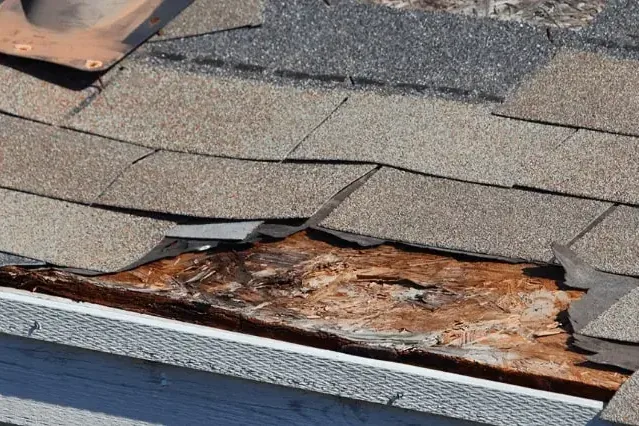
In April 2018 an EF0 tornado struck the area between Clover and Lake Wylie, crossed SC 55 and moved into Timberlake, leaving damage to roofs, siding and windows. Wind damage is only the first problem. The next rain turns every opening into a leak.
Key takeaways
- Roofs, siding and windows opened by wind let rain in for days or weeks before anyone notices.
- A temporary cover over the opening comes first, then extraction and drying of what already got wet.
- Wet attic insulation and soft drywall are usually removed, while sound framing and decking are dried in place.
- Moisture readings, not appearance, show when a wall or ceiling is truly dry.
- Photos taken before cleanup help when the homeowner talks with the insurer.
What the April 2018 tornado left open
The April 2018 storm damaged roofs, siding and windows along its path, from the area between Clover and Lake Wylie, across SC 55 and into Timberlake. Even a tornado rated EF0 can strip shingles, tear siding and break glass.
Damage like that rarely lets water in all at once. The openings sit quiet until the next rain, then the water follows the easiest path inside.
A house does not need to be in the direct path to leak. Any roof with loosened shingles, worn flashing or aging window seals can let in rain the same way after a strong storm.
- A roof covering torn or lifted by wind can leave the decking exposed to rain.
- Siding pulled loose lets wind-driven rain reach the sheathing and wall cavity behind it.
- A cracked or broken window admits rain and soaks the sill, the wall and the floor below.
- Small gaps near flashing or trim often go unseen from the ground.
How rain travels once wind has opened the house
Water does not stay where it enters. It moves down, sideways and into materials that soak it up.
Through the roof and into the attic
Water that gets past a damaged roof covering soaks the decking first, then drops onto the attic insulation. Wet insulation holds water like a sponge and presses it against the ceiling drywall below.
A brown stain on a ceiling is often the last sign, not the first.
Behind damaged siding
Siding is the outer layer of a wall, not the whole wall. Rain that slips behind it can soak sheathing, framing and insulation with no mark inside the room for a long time.
Around a broken window
A broken pane, or a window knocked out of its frame, lets rain run down the wall and across the floor. Carpet and wood flooring wick that water outward, so the wet area ends up larger than the puddle.
The first day after storm damage
The goal on day one is to stop new water and protect what is still dry. A few steps taken in order keep a small leak from becoming a large one.
- Stay off a damaged roof. A tarp placed from the ground or by a roofing crew is safer than a homeowner climbing up.
- Photograph every opening, stain and wet surface before anything is moved.
- Move furniture, electronics and boxes away from wet walls and floors.
- Turn off power to any room with a dripping ceiling or a soaked outlet.
- Do not run a household vacuum on standing water.
Reading the attic and ceilings after wind damage
An attic inspection tells more than the ceiling does. A flashlight and a careful look show where water entered and how far it spread.
Anything that looks structural, such as a ceiling that sags, is a reason to stay out of that room and bring in a professional.
- Daylight showing through the roof deck marks an opening.
- Dark, damp insulation or stained rafters mark the path of the water.
- A musty smell in a closet or hallway can point to a hidden leak.
- Ceiling drywall that bubbles, rings or sags has been wet for a while.
What extraction and drying remove first
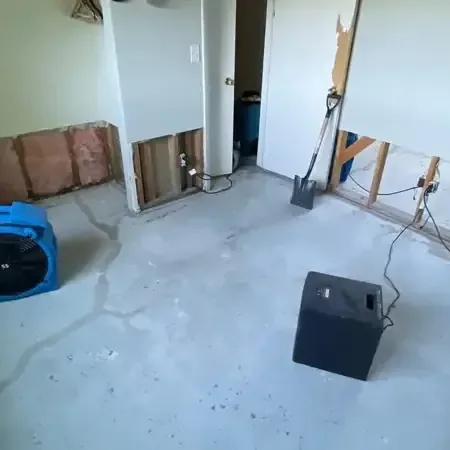
The extraction crew pulls standing water and wet carpet first, because water left in place keeps soaking into the subfloor and the bottoms of walls. Then the team reads moisture in ceilings, walls and flooring to map the wet area.
That work starts with water extraction and moves into drying.
A roof leak reaches farther than the stain suggests. The team follows the readings from the visible stain outward until dry material turns up on every side.
Wet building materials start to cause new problems within 24 to 48 hours, which is why drying begins as soon as the opening is covered. Insulation, drywall and carpet soak up water fastest, while framing and decking dry more slowly.
Drying is finished when readings match a dry reference, not when surfaces feel dry. A wet ceiling that is caught early is often a smaller job, and a ceiling leak is opened, dried and closed up again in steps.
- Soaked attic insulation is removed, since it will not dry in place.
- Ceiling drywall that is sagging, stained through or soft is cut out.
- Decking and framing that are sound are dried with air movers and dehumidifiers rather than replaced.
- Flooring under a window leak is lifted when water has moved beneath it.
A typical order of work
Every storm opening is different, but the sequence is usually the same.
- Cover the opening and make the house safe to work in.
- Extract standing water and remove soaked insulation, carpet and drywall.
- Set air movers and dehumidifiers and mark the moisture readings.
- Check the readings each day and adjust the equipment.
- Remove the equipment when readings match a dry reference, then hand the house to the repair crew.
The May 3, 2021 storm off SC 55
On May 3, 2021 a storm under a York County tornado warning damaged barns on a farm off SC 55 near Clover. A warning does not need a direct hit for wind and rain to find a weak spot in a roof.
After any severe storm, a quick look from the ground and a check of the attic ceiling can catch trouble before the next round of rain. Missing shingles, loose siding and cracked glass are the usual signs.
For flooding rather than wind, see storm and flash flood cleanup.
Getting ready before the next storm
A little preparation cuts the cost of the next event. Most of it takes an afternoon.
- Look for lifted or missing shingles, loose siding and cracked windows after every severe storm.
- Check the attic for damp insulation, dark stains or daylight at the roof.
- Know where the main water and power shutoffs are.
- Keep a folder of photos showing the house in normal condition.
- Keep contact details for a roofer and a restoration team where they are easy to find.
Questions
Can rain damage a house days after the wind passes?
Yes. Openings made by wind stay open until they are covered, so the next rain can soak insulation and walls even when the house looked fine after the storm.
Should wet insulation in the attic be removed?
Wet insulation holds water against the ceiling, so it is usually removed. The team checks the ceiling below at the same time and dries the framing.
How long does drying take after a roof opening?
Drying commonly takes a few days, depending on how much of the structure got wet. The team checks readings each day and stops when they match a dry reference.
Does a roof leak mean the ceiling must be replaced?
Not always. Stained but firm drywall can often be dried, while drywall that sags or feels soft is cut out and replaced.
Who should be contacted first after storm damage?
Cover the opening and document it, then contact the insurer and a restoration team. A roofer repairs the roof itself, while the restoration team handles the water already inside.
What should be photographed before cleanup starts?
The openings, any stains, wet carpet or flooring, and the damaged belongings. Dated photos show the insurer the condition of the house before work began.