US 321 is Main Street in Clover, and the town square sits where it meets SC 55. A shop on that street can lose a day of sales to one split pipe or one leaking roof. How the first day goes decides whether the doors stay open.
Key takeaways
- Shut off the water or the power to the wet area first, then photograph the damage before anything is moved.
- Phased drying lets part of a store stay open while the wet zone is sealed off and dried.
- After-hours crews work when the shop is closed, so customers and staff stay clear of the equipment.
- Stock, fixtures and paper records wick water fast and should be moved and protected early.
- Neighbors who share a wall or a ceiling with the shop should hear about a leak early, because water crosses property boundaries.
Why a leak in an older downtown building spreads
The Clover Downtown Historic District is on the National Register, and older blocks like it often have shops that share walls, floors or roofs. A leak that starts in one unit can follow a joist or a wall cavity into the next, and a roof leak can reach several shops below it.
Water also hides in older building materials, so a surface that looks dry may still hold moisture.
Clover started as a railroad stop in 1876 and was founded just north of the earlier settlement of New Centre. It was incorporated in 1887, and cotton mills ran in town, many until after World War II.
Buildings that old have usually been repaired many times. Opening a wall to chase a leak can turn up mixed materials, which is why moisture mapping comes before demolition.
- Water runs along floor joists and wall cavities into neighboring spaces.
- A leak from the roof or an upper floor drops into the shop below as a ceiling stain.
- Masonry and plaster hold moisture and can look dry on the surface long after the water stopped.
- Wood flooring wicks water sideways, so a small puddle can mean a large wet area.
The first day for a shop owner
The first day is mostly about stopping the water and protecting what can still be saved.
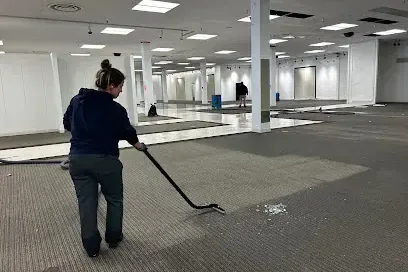
Extraction starts with the standing water, because water left in place keeps soaking into flooring and the bottoms of walls. See water extraction for how that step is done.
- Shut off the water at the main valve for a pipe leak, or shut off power to the wet area for a roof leak.
- Photograph the source, the wet surfaces and the stock before moving anything.
- Move inventory, computers and paper records out of the wet zone, and lift items off the floor.
- Tell the landlord or building owner and any neighbor who shares a wall or ceiling.
- Contact the insurer and a restoration team so extraction can begin.
Phased drying: keeping part of the store open
A store does not have to be dried all at once. The commercial water damage team plans zones so the dry part of the shop keeps working.
Zone the space
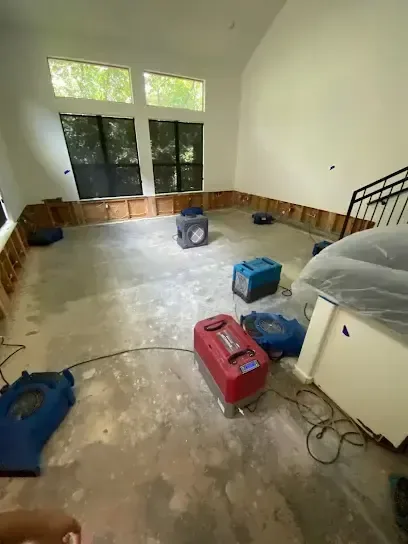
The mitigation team marks the wet area, seals it off with plastic barriers and sets equipment inside it. The dry side can keep selling as long as the zones stay separate.
Moisture readings show where the wet zone really ends, and that is often past the visible stain.
After-hours work
Noisy equipment and crew traffic are easier to manage when the shop is closed. After-hours crews can handle demolition, extraction and equipment changes so the store opens the next morning.
- Air movers and dehumidifiers run through the night in the sealed zone.
- Daily checks adjust the equipment and show when a zone can reopen.
Day two: the walkthrough and the plan
By the second day the wet area is mapped and the plan is written down. A short walkthrough with the owner covers the schedule, the zones and what stays open.
Clear communication keeps customers informed too. A short sign at the door about a closed aisle or a reduced space avoids confusion.
- Moisture readings are marked on the walls and floor so everyone can see the wet zone.
- The team explains which materials are being removed and why.
- The owner picks the hours for loud work and equipment changes.
- Daily check-ins confirm the readings and set the next day's plan.
Stock, fixtures and records
What a shop owns often matters as much as the building. Some items can be saved if they are moved early.
- Paper, cardboard and fabric wick water quickly and should be moved first.
- Shelving and displays on a wet floor are lifted onto blocks or taken out.
- Electronics and registers stay off the floor and away from wet walls until they are checked.
- A written list with photos of what got wet helps when the insurer asks.
Landlords, tenants and neighbors
In a row of older shops, a leak in one unit often reaches the next. Telling the neighbor early lets both owners start structural drying before the damage spreads.
Leases usually say who handles the building and who handles contents, so reading the lease early avoids delays. A restoration team can work with the building owner and the tenant at the same time.
From dry-out to repair
Once readings show the structure is dry, the equipment comes out and repairs begin. Drywall, flooring and paint are replaced on a schedule that fits the shop.
Many owners pair the repair with a fix for the cause, such as a new supply pipe after a burst pipe or roof work after a leak.
- Replace only what readings or inspection show cannot be dried.
- Repair the source, such as a failed pipe or a worn roof section, before closing up the walls.
- Schedule paint and flooring for quiet hours so sales are not interrupted.
Questions
Can a shop stay open during water damage drying?
Often yes. A sealed drying zone keeps the wet area separate, and the rest of the shop can stay open when it is safe and dry.
What happens to inventory that got wet?
Items that wicked water are moved out first. Some can be dried, while paper and cardboard goods are usually discarded.
Who pays for repairs in a rented storefront?
That depends on the lease and the insurance. The landlord's policy usually covers the building and the tenant's covers contents, so reading both early helps.
How long does a commercial dry-out take?
Many take several days, depending on the size of the wet area and the materials involved. Daily readings show when each zone is dry.
Is a leak next door the shop's problem?
It can become one if the water crosses a shared wall or ceiling. Telling the neighbor and the building owner early lets everyone start drying at once.
What should be documented for the insurer?
Photos of the source and the wet areas, a list of damaged stock and fixtures, receipts, and the daily moisture readings from the drying team.