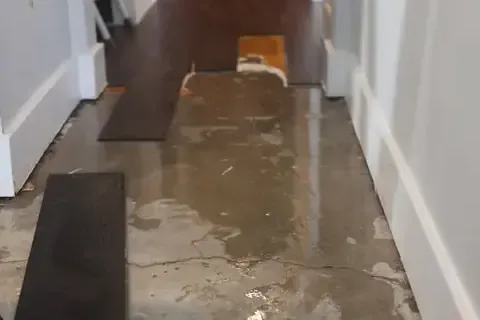
A slab leak is a leak in a pipe under a concrete floor, and it can run for weeks without a visible puddle. City of Belmont water customers have a tool that helps: the WaterSmart portal shows usage and can send leak alerts. Used with a simple meter test, it can point to hidden water before the floor is ruined.
Key takeaways
- Warm spots on a floor and a meter that moves with every fixture off point to a slab leak.
- The city's WaterSmart portal lets customers check usage and set leak alerts.
- The city lists 24/7 response for water meter and main shutoff, and a home has its own shutoff valve as well.
- Slab leak cleanup lifts flooring, dries the slab and the wall bottoms and removes wet materials.
- After a leak, the city's Leak Adjustment Form can adjust the sewer portion of the bill.
Signs of a slab leak
Slab leaks hide, so the signs are indirect. Several together point to a leak under the floor.
No single sign proves a slab leak, but two or three together are reason enough for a meter test.
- A warm spot on a floor, which can come from a leaking hot water pipe.
- The sound of running water when every fixture is off.
- A usage reading that climbs with no change in habits.
- Damp carpet, lifting flooring or a musty smell near baseboards.
- A wet strip along an outside wall at the edge of the slab.
Using WaterSmart to confirm the usage
City of Belmont water customers can check usage and set up leak alerts in the city's WaterSmart portal. A usage graph that stays high when no one is home is a strong hint of a leak.
The portal does not find the leak itself. It tells the owner whether water is moving when it should not be.
Some customers check the portal weekly, while others look only when a bill jumps. A weekly look catches a slow leak sooner.
- Look at overnight and weekend usage, when the house is quiet.
- Set a leak alert so the portal flags steady flow.
- Compare current usage with the same time of year before.
The meter test, step by step
A meter test takes only a few steps and needs no tools. It separates a leak inside the house from normal use.
Write down the reading and the time of each check so a plumber can see the pattern. A leak that runs steadily looks different from a fixture that drips now and then.
- Turn off every fixture and appliance that uses water, including the ice maker and any irrigation.
- Find the water meter and look at the leak indicator or the small low flow dial.
- Note the reading, wait, then check again.
- If the reading or the dial moves with everything off, water is escaping.
- Shut off the home's main valve and check again: if the movement stops, the leak is inside the house.
Shutting off the water
Every home has its own main shutoff valve, and finding it before an emergency saves time. The city lists 24/7 response for water meter and main shutoff, which helps when the home's valve will not turn.
Once the water is off, the leak stops growing. The next job is the water that already escaped, and the plumber and the restoration team handle different parts of it.
The local water damage pages show how each service fits a leak.
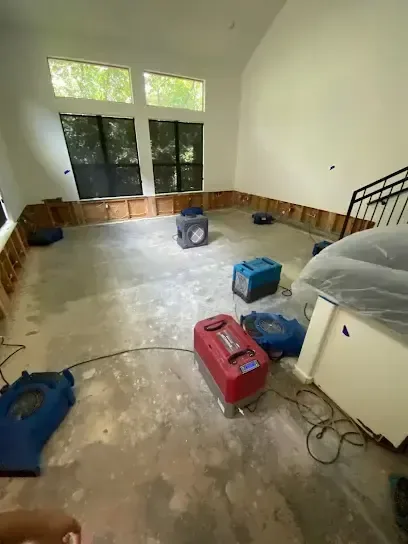
What slab leak cleanup involves
Slab leak work has two parts: stopping the source and drying everything it wet. Both matter, because a repaired pipe over a wet slab still leaves a damp floor.
Slab leaks are often found late, so the wet area can be larger than the visible damage. Moisture mapping across the floor and the lower walls shows the true edge before anything is torn out.
Finding and stopping the leak
A plumber locates the leak and repairs or reroutes the pipe, which stops the source. The restoration team starts once the water is off.
Drying the slab and the walls
Flooring is lifted so the slab can dry, and wall bottoms are checked for water that wicked upward. Dehumidifiers and air movers run until readings match a dry reference.
See slab leak water damage for the full process.
- Carpet and pad above a wet slab are usually removed.
- Baseboards are pulled so the bottoms of the walls can dry.
- Concrete holds water, so it dries slowly and is checked repeatedly.
The bill after a leak
After a water leak, the City of Belmont can adjust the sewer portion of the bill when the customer completes its Leak Adjustment Form. The city can say what it needs with the form.
It helps to keep the repair invoice, the meter readings and the dates in one folder. A burst pipe or a slab leak creates the same paperwork.
- Photograph the meter readings.
- Keep the plumber's invoice and the repair date.
- Note the dates of any WaterSmart usage alerts.
Old buildings and new growth
Belmont grew from 10,076 residents in 2010 to 15,010 in 2020, an increase of 49.0%. The Downtown Belmont Historic District holds older buildings, while newer growth sits beside it, so plumbing age varies from one address to the next.
Age is not the only factor, because water pressure, ground movement and a poor connection can all start a leak. Hidden water can show up in any building.
Hidden water in a slab also calls for structural drying, since the floor and wall bottoms must reach a dry reading. Water extraction is the first step once the source is shut off.
- Older buildings, such as those in the historic district, may carry older plumbing.
- Newer neighborhoods may have newer systems but still develop leaks at fittings and connections.
- Both need the same meter test and the same prompt drying.
Questions
How can a homeowner tell a slab leak from a surface spill?
A spill leaves a puddle that stays the same size, while a slab leak keeps feeding a wet area or a warm spot. A meter that moves with every fixture off confirms water is escaping.
Does the WaterSmart portal find the leak location?
No. It shows usage and can send alerts, which tells the owner water is moving. A plumber finds the exact spot.
Who shuts off the water to the house?
The homeowner can use the home's main valve. The city lists 24/7 response for meter and main shutoff if the valve will not close.
How long does it take to dry a slab?
Concrete dries slowly, so it often takes several days. Readings are repeated until they match a dry reference.
Can the sewer portion of a bill be adjusted after a leak?
The City of Belmont can adjust it when the customer completes its Leak Adjustment Form. The city can explain what it requires.
Does a slab leak always raise the water bill?
Often, but not always. A small leak may change usage only slightly, which is why alerts and meter checks are useful.