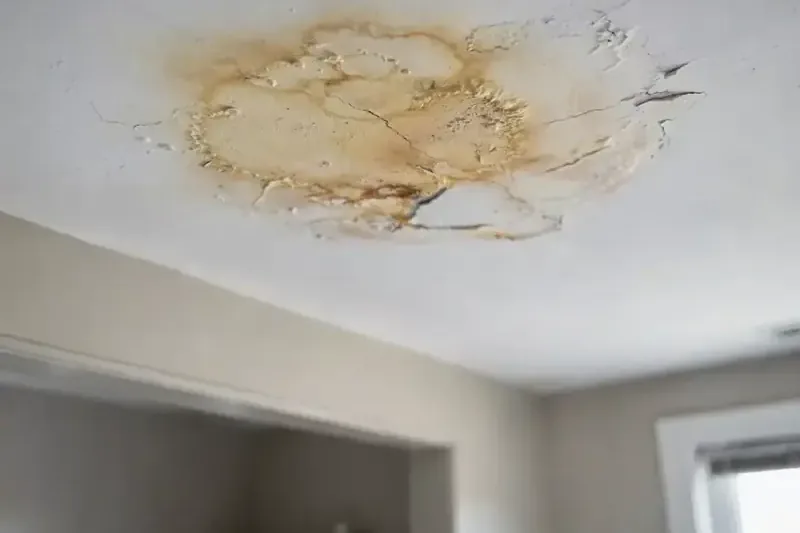
In downtown York the Rose Hotel, built in 1852, has been restored and converted into apartments. Buildings like that put homes above and beside one another, so water rarely stops at the floor where a leak starts. When one unit leaks, the unit below usually feels it first.
Key takeaways
- Water from one apartment can travel through ceilings, walls and floors into the unit below and the unit beside it.
- The usual sources are appliance hoses, drain pipes, supply pipes and tubs or toilets that overflow.
- Tell the property manager or building owner in writing right away, and tell the neighbor who shares the wall or ceiling.
- Drying often happens in two or three units at once, so coordination between owners and tenants matters.
- Dated photos, a log of contacts and receipts protect both the tenant and the owner when the insurer asks questions.
How a leak travels between apartments
In a multi unit building, floors and ceilings are layers, and water finds the gaps between them. It follows pipes, joists and wall cavities, then shows up where the layers end.
The Rose Hotel was built in 1852 and restored as apartments, and in a building like that, water from one unit can reach the one below.
In older buildings, pipes can run through chases and between floors, so water may take an unexpected path. The stain on the ceiling below shows where the water came out, not always where it went in.
- Water drops through the ceiling directly under the leak.
- It also runs sideways along joists into neighboring units.
- Wall cavities carry water down to the floor below, so the stain can appear far from the source.
- Light fixtures and ceiling fans under a leak can collect water and become unsafe to touch.
Common sources upstairs
Most upstairs leaks start with equipment that runs on water every day. A slow drip can run for weeks before a stain appears below.
Reading the source correctly saves time, because the repair and the cleanup follow from it. Look at appliance leak water damage for how those leaks are dried.
- A washing machine supply hose or drain that has loosened or split.
- A dishwasher supply or drain connection under the kitchen sink.
- An ice maker supply tube behind a refrigerator.
- A tub or shower overflow, or a failed seal around a drain.
- A toilet that overflows or a supply connection that weeps.
- A water heater that begins to leak in a closet.
If water is coming through the ceiling
A leaking ceiling can fail suddenly, so safety comes first. A ceiling that bulges with water should not be poked or cut open by a tenant; a professional can release the water in a controlled way.
Once the water is contained, the ceiling can be judged. Stained but firm drywall can often be dried in place, while drywall that sags or feels soft is cut out and replaced.
Waiting rarely helps. Wet drywall and insulation keep absorbing water until the source is stopped and the cavity is dried.
- Keep people and pets out from under a ceiling that sags or bulges.
- Turn off power at the breaker for the room if water is near light fixtures or outlets.
- Place buckets or tubs under drips and move furniture away.
- Photograph the ceiling, the walls and the floor before anything is cleaned up.
- Tell the upstairs neighbor and the property manager right away.
Who to notify, and what to put in writing
A leak between units involves at least two households and a building owner. Clear notes at the start prevent arguments later.
A written note also helps if the unit above is empty. The property manager can then reach the right valve and enter the unit when needed.
- The date and the time the leak was found.
- Where the water is showing, such as a ceiling, a wall or a light fixture.
- What was done to limit it, such as shutting off a valve.
- Photos of the source and the damage, attached to the message.
Tenants
A tenant should tell the property manager or owner as soon as the leak is found, then follow up in writing. The message should include the date, the location of the water and photos.
Owners
An owner of one unit should tell the building manager and the neighbors, since water often crosses unit boundaries. Shutoff valves for a building can sit in a shared space, so the manager may need to help.
What the drying team does in both units
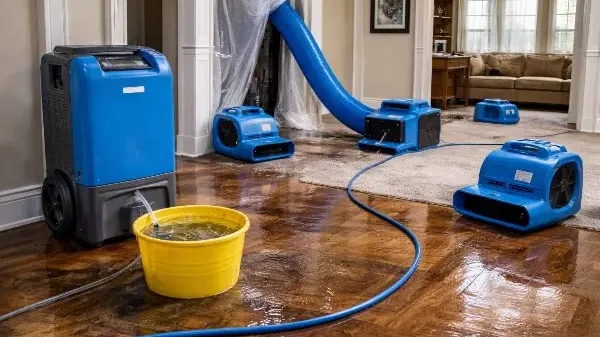
A leak that crosses units is dried in both places. The mitigation team starts where the water entered and works outward until dry material turns up on every side.
Read how a ceiling leak is opened and dried, and how structural drying finishes the job.
- Extraction removes standing water from floors and carpet.
- Wet ceiling drywall is cut out where it is soft or stained through.
- Insulation and carpet pad that soaked up water are removed.
- Air movers and dehumidifiers dry the wall and ceiling cavities in each unit.
- Moisture readings are repeated in each unit until they match a dry reference.
Water and sewer service in York
City of York Utilities provides water and sewer service, and the two are billed together on one monthly bill. Owners and tenants with questions about service can start there.
The City of York also has a Public Works department. Neither one repairs a pipe or a hose inside an apartment, which stays a private matter handled by a plumber.
Documenting the loss for the landlord and the insurer
Tenants and owners are often covered under different policies. A tenant's policy usually covers belongings, while the building's policy covers the structure, so photos of both help.
Keep receipts for any hotel stay, temporary storage or cleaning. A written timeline of when the leak was found and who was told makes later conversations easier.
A water extraction report with readings adds to the file.
Tenants should also keep their own policy information close, because belongings, furniture and electronics are usually covered separately from the building.
- Date-stamped photos of the source, the ceiling and the floor.
- A list of damaged belongings with their approximate ages.
- Names, dates and times of each person contacted.
Questions
Who is responsible when an upstairs leak damages the unit below?
Responsibility depends on the cause, the lease and the building's insurance. The property manager or owner can say who handles repairs, and the insurer decides what is covered.
Should a tenant clean up before the property manager sees the damage?
A tenant should limit the damage by stopping and containing the water, but photograph everything first. Removing damaged materials without notice can complicate the record.
How long does it take to dry two apartments?
Several days is common, depending on how many layers got wet. The team repeats moisture readings in each unit until both match a dry reference.
Can the upstairs neighbor be asked to stop the leak?
Yes. Ask the neighbor to shut off the water at the fixture or the unit shutoff, and tell the property manager at the same time.
What if the leak comes from a pipe inside a wall?
Water inside a wall needs the wall opened to find and dry the cavity. The team uses moisture readings to open only what is wet.
What if nobody is home in the unit above?
Tell the property manager right away so the water can be shut off at the right valve. A manager or owner may have access to the unit, which saves time.