Structural Drying and Dehumidification in Tega Cay, SC
Removing the water is only half of a dry-out. The drying team in Tega Cay sets air movers and dehumidifiers to pull moisture out of studs, subfloors and drywall, and checks the readings until they are normal.
(888) 532-8921Ask a tech about drying the walls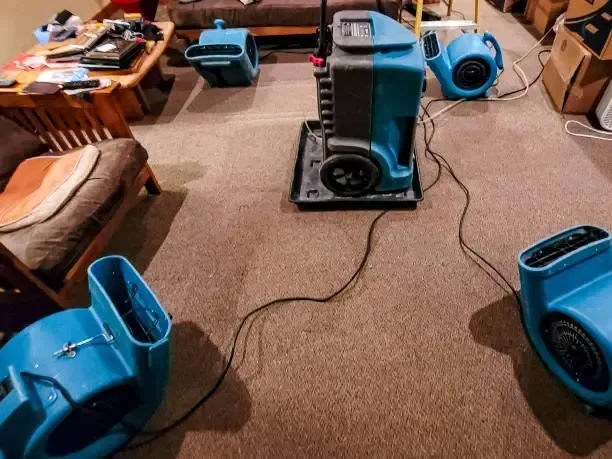
What every structural drying and dehumidification job is held to
Treated as urgent, any hour
Active water is treated as urgent at any hour. The response team rolls with extraction gear, air movers and meters, nights and weekends included.
Dried to the IICRC S500 goal
Air movers and LGR dehumidifiers are sized to the class of loss and stay on site until the readings reach the dry goal.
A claim file built every day
Moisture maps, psychrometric logs and timestamped photos are kept from the first visit on, the record an adjuster looks for.
First steps for structural drying and dehumidification while help is on the way
- Keep doors closed. Closed doors help the equipment dry a room faster.
- Leave machines running. Do not switch equipment off, since the dry-out needs steady airflow.
- Open cabinet doors. Let air reach cabinet bases and wall bottoms.
- Keep a log. Note the dates equipment is placed and removed.
What does structural drying and dehumidification cost in Tega Cay, SC?
Structural drying in Tega Cay typically runs from $1,000 to $10,000, based on the number of rooms and the density of the materials. One or two rooms stay low, and dense materials such as concrete or hardwood reach the top.
One or two rooms
- Air movers placed
- Dehumidifier running
- Daily moisture logs
Several rooms
- Equipment in each room
- Wall cavities vented
- Readings each visit
Dense materials
- Hardwood and concrete
- Longer drying visits
- Desiccant units if needed
Ranges are typical, not a quote: the water category, square footage, material class and how fast drying started move the number most. Run the water damage cost calculator for a closer range.
How structural drying and dehumidification is handled, start to dry
The tech on the walkthrough maps moisture before any equipment goes down, and the gear stays until the readings say dry, not until the room looks dry.
Map the moisture
Meters mark every wet surface.
Place equipment
Air movers and dehumidifiers go in by the readings.
Read and adjust
Equipment is moved as areas dry.
Sign off
Readings match a dry reference.
Drying follows the same moisture readings in any house, whatever its age or style. In a planned city whose housing grew from 1,577 units in 2000 to 4,653 in 2020, that means the same method in every home the crew visits.
How drying equipment works
After extraction, air movers push dry air across wet surfaces so water evaporates, and dehumidifiers pull that moisture out of the air and drain it away. Without the dehumidifiers, the water would simply move into the air and settle back onto cool surfaces.
Walls and floors still wet after the water is out? Get them dried.
Set the drying equipmentWhat gets measured
- Moisture content in studs, plates and subfloor
- Drywall and baseboard readings against a dry sample
- Room temperature and relative humidity
- Thermal camera images of cooler wet areas
- Moisture behind cabinets and baseboards
Readings are logged at each visit, and equipment is moved as areas dry. A wall that still reads wet is revisited rather than assumed dry.
When the equipment comes out
Equipment stays until the wet materials read the same as an unaffected area. Pulling it early leaves moisture in the framing, which is how stains, swelling and musty smells return after the paint is dry. The final readings go in the file.
Structural drying and dehumidification across Tega Cay and nearby communities
Where the crews work
Structural drying serves homes across ZIP 29708 on the Lake Wylie peninsula, with the same readings and equipment used in a house of any size, once the water has been removed.
The same service nearby: structural drying and dehumidification in Clover, Belmont, York.
Related water damage services in Tega Cay
Structural Drying and Dehumidification questions, answered
Still dealing with it?
Walls and floors still wet after the water is out? Get them dried.
(888) 532-8921 Set the drying equipmentHow do air movers and dehumidifiers work together?
Air movers speed up evaporation at the surface, and dehumidifiers remove the moisture from the air so it does not settle back onto walls and floors.
Why does a house feel humid during drying?
Equipment can raise the temperature and release warm, damp air at first. As materials dry, the humidity falls and readings show the process working.
Is the equipment loud or costly to run?
It is noisy enough to notice, and it draws power continuously, so the electric bill goes up while the dry-out runs. Many policies treat that as part of the claim.
Can wet drywall be dried without removal?
Sometimes, when the water was clean and the drywall is only damp. Drywall that is soft, stained or soaked with contaminated water is normally cut out.
How is dry defined?
Dry means the wet materials read the same as an unaffected part of the same house. The reading, not how a surface feels, decides when the equipment leaves.
Can mold develop while drying equipment runs?
Not if the work is done on time. Mold usually begins after about 24 to 48 hours of dampness, which is why equipment is set early and readings keep falling.
Damp materials after a leak? A tech can read the moisture.
Water left in studs and subfloors causes swelling and musty smells long after cleanup. The drying team places equipment by the readings and logs it until the house is dry.
(888) 532-8921Schedule the structural dry-out