Slab Leak Water Damage in York, SC
A pipe leaking beneath a concrete floor wets the slab first and the flooring second, so the damage spreads unseen. In York, the drying team lifts the wet covering, removes the water and dries the concrete and the bottoms of nearby walls.
(888) 532-8921Ask a tech about a damp, warm floor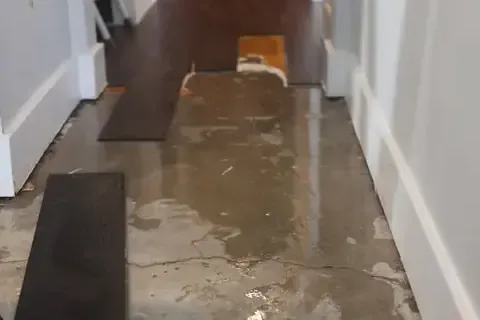
What every slab leak water damage job is held to
Treated as urgent, any hour
Active water is treated as urgent at any hour. The response team rolls with extraction gear, air movers and meters, nights and weekends included.
Dried to the IICRC S500 goal
Air movers and LGR dehumidifiers are sized to the class of loss and stay on site until the readings reach the dry goal.
A claim file built every day
Moisture maps, psychrometric logs and timestamped photos are kept from the first visit on, the record an adjuster looks for.
First steps for slab leak water damage while help is on the way
- Check the meter. Close every tap and appliance, then see whether the dial still turns.
- Close the main. If it turns and a floor feels damp, shut the main valve right away.
- Clear the spot. Lift rugs and move furniture off any warm or wet patch.
- Book both trades. A plumber finds the pipe, and the drying crew handles the wet floor.
What does slab leak water damage cost in York, SC?
Drying after a slab leak usually costs $1,500 to $7,500, with the plumbing repair billed separately. One tiled room sits near the bottom, while carpeted rooms and cabinets above the leak raise the total.
One room
- Covering lifted over the leak
- Tile or plank floors
- Slab and baseboard dried
Several rooms
- Carpet and pad pulled
- Cabinet kick plates opened
- LGR or desiccant units
Leak ran for weeks
- Water across a whole level
- Wall bases cut and dried
- Longer equipment time
Ranges are typical, not a quote: the water category, square footage, material class and how fast drying started move the number most. Run the water damage cost calculator for a closer range.
How slab leak water damage is handled, start to dry
The tech on the walkthrough maps moisture before any equipment goes down, and the gear stays until the readings say dry, not until the room looks dry.
Measure the spread
Meters follow the water under floors and up the walls.
Lift and remove
Wet covering and baseboard come up and water is extracted.
Dry the concrete
Dehumidifiers and air movers draw water from the slab.
Match the reading
The wet area must equal a dry spot on the same floor.
A slab leak happens when a water pipe set in or below a concrete floor starts to leak. The water has nowhere to go but up and out, so it soaks the slab, then the pad, laminate or tile setting bed above it, often for weeks before anyone notices a problem.
Clues that point to the slab
- A water bill that rises with no change in use
- Flooring that feels warm, damp or soft in one area
- Grout that stays dark or tiles that start to loosen
- A meter that keeps turning with every fixture closed
That meter check is the simplest test at home, and the town overview covers the other water problems local homes see.
Floor damp and the meter still moving? A drying tech can measure the slab.
Get the concrete measuredRepair and drying are separate jobs
A plumber pinpoints the leaking pipe with electronic detection and fixes it through the floor or reroutes it. The drying team then measures how far the water spread, pulls up wet covering and baseboard, and opens cabinet kick plates where the water reached, following the same structural drying method used on every loss.
Patience with concrete
A slab gives up water slowly. LGR or desiccant dehumidifiers run with air movers aimed at the exposed concrete, and surface readings are checked against a dry corner of the same floor until the two agree. Ready.gov also lists general steps for dealing with water in the home.
Slab leak water damage across York and nearby communities
Where the crews work
Slab leak drying reaches homes across ZIP 29745, from the downtown historic district near the courthouse and West Liberty Street to the newer houses added as the town grew.
The same service nearby: slab leak water damage in Clover, Tega Cay, Gastonia.
Related water damage services in York
Slab Leak Water Damage questions, answered
Still dealing with it?
Floor damp and the meter still moving? A drying tech can measure the slab.
(888) 532-8921 Get the concrete measuredWhat is the quickest way to check for a slab leak?
Turn off every faucet, appliance and irrigation zone, then watch the water meter for several minutes. A dial or leak indicator that keeps moving means water is escaping, and a plumber can trace it with electronic equipment.
Will the whole floor come up after a slab leak?
Usually only the covering over the wet zone. Carpet, pad, laminate and floating floors hold water against the concrete, so they are lifted. Glued tile can sometimes stay when readings show the slab beneath it is drying.
Does insurance pay for slab leak water damage?
Policies often pay for the water damage and for opening the floor to reach the pipe, but not for the pipe itself. Wording varies, so read your policy or ask your insurer before work begins.
Why does drying a slab take so long?
Concrete is dense and gives up water slowly, which is why desiccant or LGR dehumidifiers run for several days. The job ends when surface readings match a dry part of the same slab.
What does a warm patch over a slab leak mean?
A hot water pipe leaking under the concrete warms the slab above it. A warm patch near a kitchen or bathroom, along with a meter that keeps turning, strongly suggests a slab leak.
Can a slab leak be left alone for a while?
Closing the main stops new water, but the water already under the floor keeps spreading into flooring, cabinets and wall bases. The sooner drying starts, the less material has to be removed.
Leak under the floor? Get the slab dried properly.
Water beneath concrete spreads into flooring, cabinets and wall bases long before it shows. The drying team lifts the wet covering and dries the slab.
(888) 532-8921Start drying the slab today